


7 days Kilimanjaro Umbwe route
Home » 7 days Kilimanjaro Umbwe route
7 Days, 6 Nights
Price On Request
Tour Overview
The Umbwe route is short, steep, and straightforward. It is considered to be the most difficult route up Mount Kilimanjaro. Because of the rapid ascent, Umbwe does not provide the necessary stages for altitude acclimatization. Although traffic on this route is low, so are the chances of success. The route is offered for at least six days, but seven days is recommended. The Umbwe route should be attempted only by experienced hikers who are confident in their ability to acclimate. Overall, the Umbwe route is not recommended, and we discourage our clients from using it.
Tour Summary
Day 1
Umbwe Gate To Umbwe Cave Camp (2,900m/9,514ft)
Accommodation: Umbwe Cave Camp
Meal Plan: Breakfast, Lunch, Dinner
Day 2
Umbwe Cave Camp – Barranco Camp (3,950m/12,960ft)
Accommodation: Barranco camp
Meal Plan: Breakfast, Lunch, Dinner
Day 3
Barranco camp (3,900 m/12,800 ft)
Accommodation: Barranco Camp
Meal Plan: Breakfast, Lunch, Dinner
Day 4
Barranco Camp (3,950M/12,960FT) – Karanga Valley (4,200M/13,780FT)
Accommodation: Karanga camp
Meal : Breakfast, Lunch, Dinner
Day 5
Karanga Valley (4,200M/13,780FT) – Barafu Camp (4,600M/15,100FT)
Accommodation: Barafu Camp
Meal : Breakfast, Lunch, Dinner
Day 6
Barafu Camp (4,600m/15,100ft) to Uhuru Peak (5,895m/19,340ft) to Mweka Camp (3,100m/10,170ft)
Accommodation: Mweka Camp
Meal : Breakfast, Lunch, Dinner
Day 7
Mweka Camp (3,100M/10,170FT) to Mweka Gate (1,500M/4,920FT)
Book With Us
Day by day
Day 1: UMBWE GATE (1,800m/5,905ft) TO UMBWE CAVE CAMP (2,900m/9,514ft)
Elevation (m): 1600m to 2900m
Distance: 11km
Time: 6 hours
Habitat: Montane Forest.
Meals: Breakfast, Lunch, and Dinner Included.
Leave Moshi/Arusha early for Umbwe Gate. Meet our porters, guides, and cooks who will accompany you on a six-day trek to Uhuru Peak, Africa’s highest peak. When you arrive, wait at the gate while we register your climb and the porters and guides make final preparations.
The first day’s destination is Umbwe Cave Camp, which is about 6 hours from the gate. The trail is steep and can be slippery in spots. Hike through the Kilimanjaro cloud forest’s most densely covered trees. The forest will thin later in the hike, revealing heathers, tall grasses, and wildflowers. Porters and cooks will go ahead and set up the camp in preparation for your arrival.
Day 2: UMBWE CAVE CAMP (2,900m/9,514ft) TO BARRANCO CAMP (3,950m/12,960ft)
Elevation (m): 2940m to 3970m
Distance: 6km
Time: 4-5 hours
Habitat: Montane Forest.
Meals: Breakfast, Lunch & Dinner Included
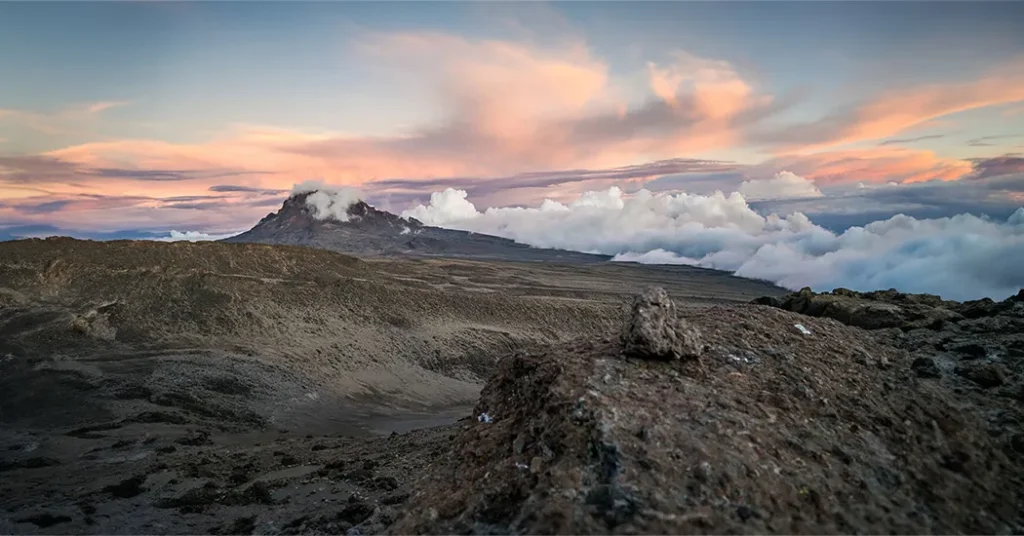
The first section of the trail continues along the ridge. After leaving the forest, continue through open moorlands to Barranco Camp. Barranco is widely regarded as the most scenic campsite on the Umbwe Trail, with giant senecios and lobelias surrounding it. Barranco has a later sunrise than the other camps because it is located in a valley.
Day 3: BARRANCO CAMP (3,900 m/12,800 ft)
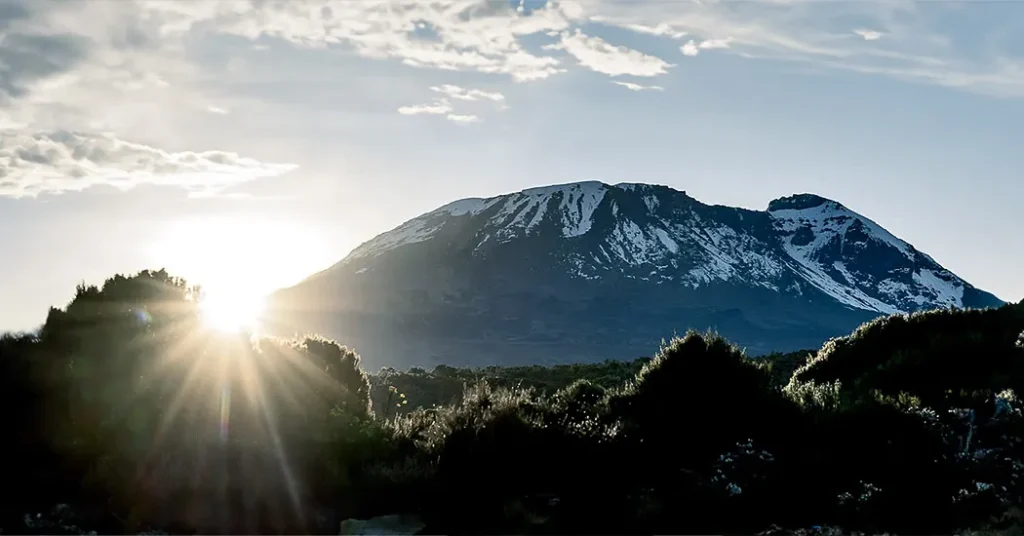
Extra day for acclimatization. Adding this day will reduce your effort and accelerate your acclimatization.
Meals: Breakfast, Lunch & Dinner Included
Day 4: BARRANCO CAMP (3,950m/12,960ft) TO KARANGA VALLEY (4,200m/13,780ft)
Elevation (m): 3950m to 3930m
Distance: 7 km
Hiking Time: 4 hours
Habitat: Alpine Desert.
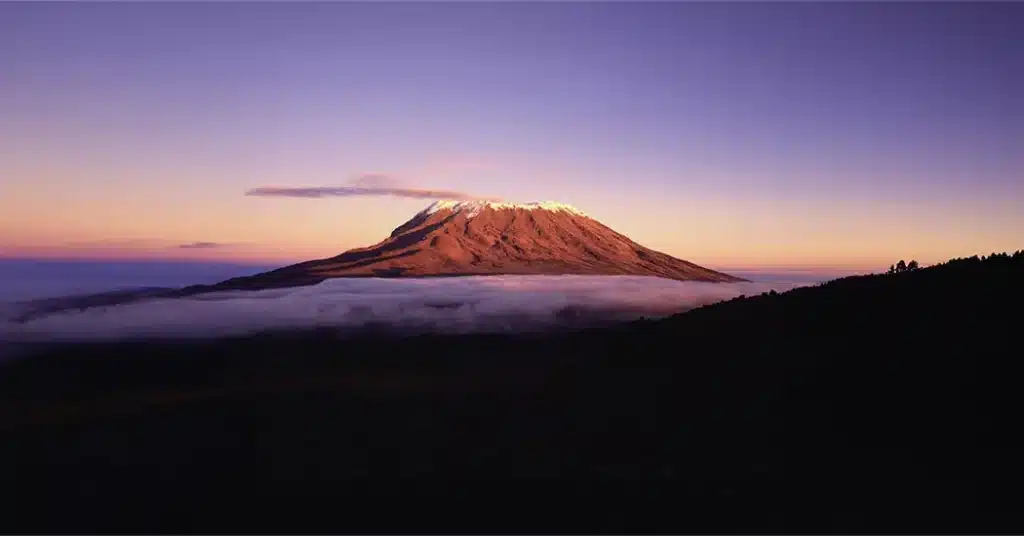
After breakfast, leave Barranco Camp and head to Karanga Valley. The day starts with a 1.5-hour scramble up Barranco Wall. This is the most difficult part of the day, and in some places you may need to use your hands to help you climb. After reaching the summit, hike through relatively flat terrain before making a short but steep descent into the lush Karanga River Valley.
Wake up early with a hot cup of coffee or tea, and leave between 12:30 and 1 a.m. Temperatures range from just below freezing at midnight to between 10 degrees Fahrenheit (-12 degrees Celsius) and -10 degrees Fahrenheit (-23 degrees Celsius) just before dawn at Gillman’s Point, located at an elevation of 18,652 feet (5,685 meters) on the crater rim. The winding scree path of the endless switchbacks will carry you through the night, and at dawn, the spires of Mawenzi will be visible against the sun’s red glow beneath the clouds.
After approximately 6 hours of walking, you will reach the crater rim near the Ratzel glacier. When you reach Gillman’s Point, gather your strength for another 1.5-hour hike on a gentle slope around the crater rim to the highest point.
Uhuru Peak stands at 19,340 feet (5,895 metres). After a brief stay at the summit, descend the steep scree path to Kibo Hut for a rest before continuing down to Horombo Hut for the night.
Accommodation
Horombo Hut | FB
DAY 5: KARANGA VALLEY (4,200M/13,780FT) TO BARAFU CAMP (4,600M/15,100FT)
Elevation (m): 3930m to 4600m
Distance: 6 km
Hiking Time: 3 hours,
Habitat: Alpine Desert.
Meals: Breakfast, Lunch & Dinner Included
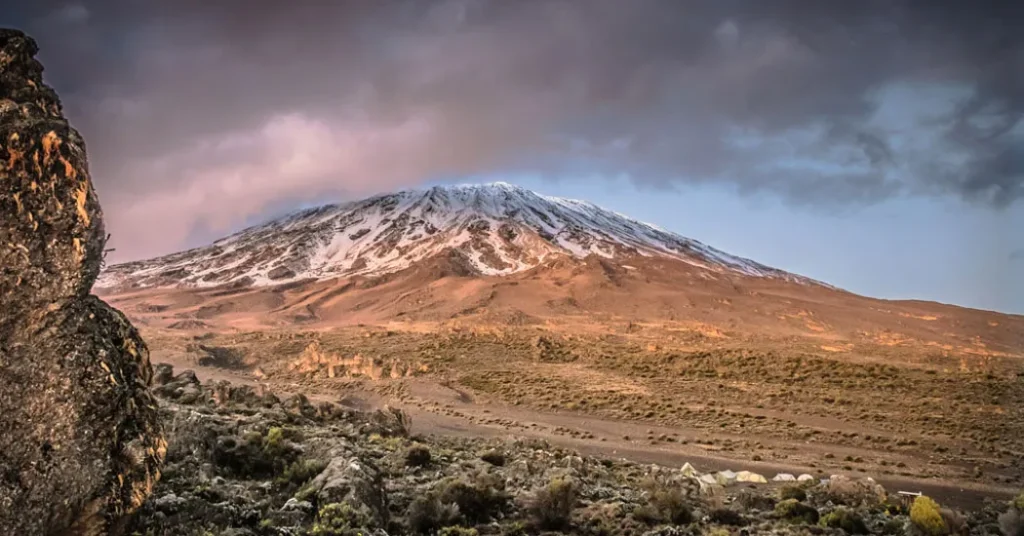
After breakfast, start hiking to Barafu Camp. View several of Kibo’s glaciers along the way to Barafu, as well as the junction that connects the Mweka descent route with the Machame trail. On day four, hike to the Heim, Kersten, and Decken Glaciers. Although the trail to Barafu passes through an alpine desert with little vegetation, Barafu Camp provides breathtaking views of Kibo and Mawenzi peaks. Try to sleep after dinner because you’ll be up before midnight for your summit hike.
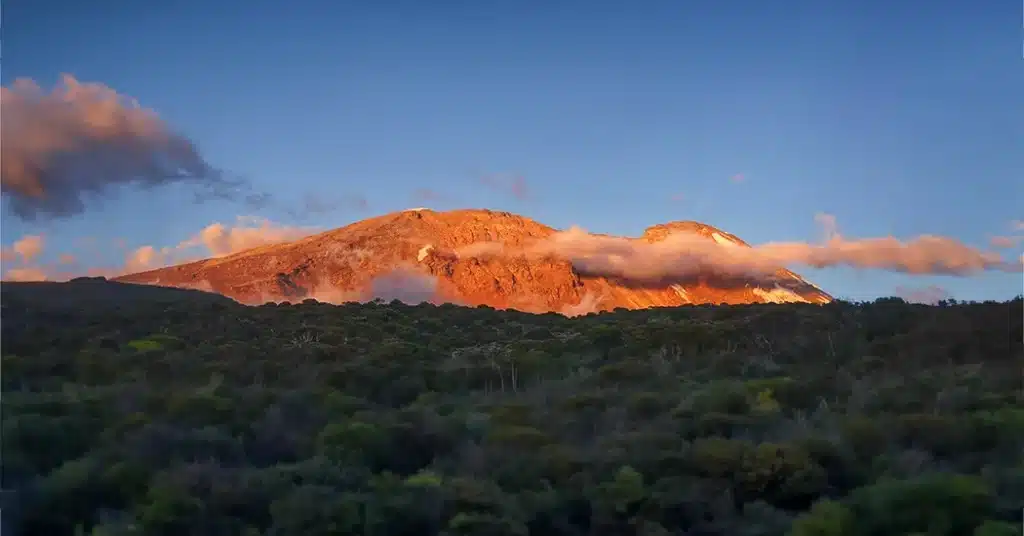
Day 6: BARAFU CAMP (4,600M/15,100FT) TO UHURU PEAK (5,895M/19,340FT) TO MWEKA CAMP (3,100M/10,170FT)
Elevation (m): 4600m to 5895m (and down to 3100m)
Distance: 7km ascent /23km descent
Time: 6- 8 hours ascent / 7-8 hours descent
Habitat: Stone scree and ice-capped summit.
Meals: Breakfast, Lunch & Dinner Included
Around midnight, start the final ascent to Uhuru Peak. Hike for the next six hours under the light of your headlamp. The climb to the crater rim is the most difficult part of the entire journey. The trail is extremely steep until you reach the crater rim at Stella Point.
The hike from Stella Point to Uhuru Peak is a gradual climb that is not particularly difficult. The altitude, however, makes the hike lengthy and exhausting. The crater rim hike takes about an hour. When you arrive at Uhuru, take photos of your guide and group before heading down to Mweka Camp. On the way down from Uhuru, take in the views of the mountain, crater, clouds, and glaciers.
At Barafu Camp, eat breakfast and take a break. You still have three to five hours before reaching Mweka Camp.
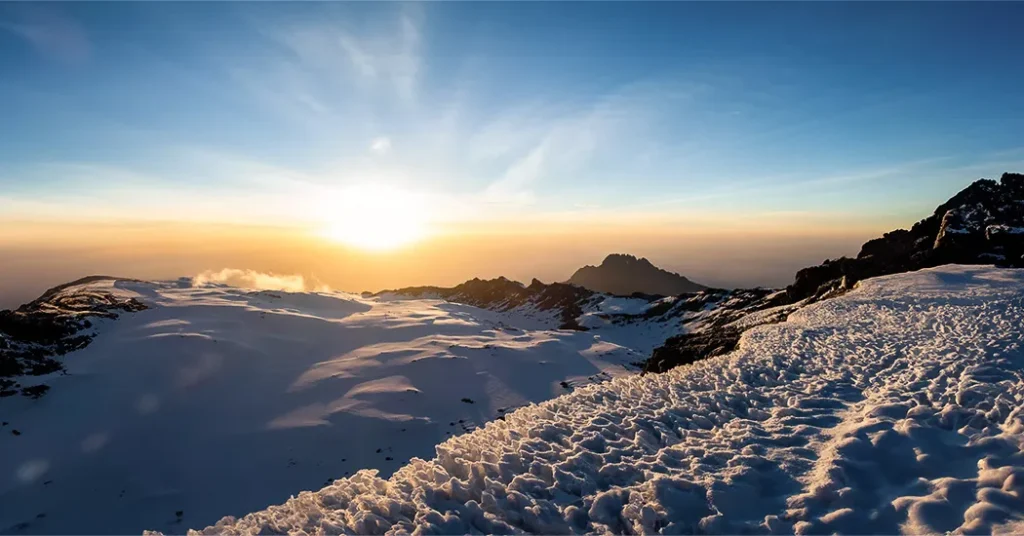
DAY 7: MWEKA CAMP (3,100M/10,170FT) TO MWEKA GATE (1,500M/4,920FT)
Elevation Loss: 1,600 meters, 5,250 feet
Hiking time: 4 hours
After breakfast, take a hike through the forest to Mweka Gate. The trail may become slippery after rain. Our vehicles will meet you at the lower station of Mweka Gate and take you back to Moshi/Arusha so you can continue with your schedule.
This marks the end of your seven-day Kilimanjaro Umbwe route.
Price
| PAX | 2 PAX | 4 PAX | 6 PAX |
| Price | $ 2,151 | $ 1,970 | $ 1,929 |
Inclusions
- Safety Equipment:
- Professional Mountain Guides, all head guides (at least 1 per trip) currently certified by NOLS USA as WFR (Wilderness First Responder)
- Park Fees
- Campsite fees
- Emergency Rescue Fees
- Camping equipment and other gears:
- Mountain Meals
- Transfer from the hotel to the starting point
- Transfer from the last point to the hotel
Exclusions
- Accommodation upon arrival and last day
- Tips for a mountain guide, recommended 15-20 per group per day
- Porters 5 – 10$ per porter per group per day
- Personal expenses
- Personal items
- Personal insurance/travel insurance
- Personal medicines/first aid kit
- Personal trekking gears
- Sleeping bag
Frequently asked questions (FAQs)
Are guides and porters included?
Yes. All treks include experienced guides, porters, and cooks, ensuring safety, carrying gear, and preparing meals.
Can the itinerary be customized?
Yes. The trek can be extended for additional acclimatization or combined with other routes to increase comfort and success rates.
Why choose the Umbwe Route for a 7-day trek?
The 7-day itinerary offers a better balance between challenge and acclimatization, while still providing a quiet and less crowded trekking experience compared to popular routes.
What type of accommodation is provided?
Umbwe is a camping route, with tents provided at each campsite. Trekkers are supported by professional guides, porters, and cooks.
What landscapes will I experience?
You will pass through dense rainforest, steep ridges, moorlands, alpine deserts, and summit zones, enjoying dramatic scenery and rapid elevation changes.
What should I pack for a 7-day Umbwe trek?
Pack layered clothing, warm gear, trekking boots, gloves, a hat, sunscreen, trekking poles, a headlamp, and a daypack. Conditions vary greatly with altitude.