7 Days, 6 Nights
Price On Request
A one-week safari in Tanzania offers a balance between adventure, relaxation, and cultural connection. This itinerary takes you through some of the country’s most iconic destinations, from the elephant-filled plains of Tarangire to the endless savannas of Serengeti and the world-renowned Ngorongoro Crater.
And the lodges are carefully selected to ensure both comfort and proximity to wildlife-rich areas, giving you an immersive safari experience.
Day 1
Arrival in Arusha
Accommodation: Rivertrees Inn
Meal Plan: Breakfast, Lunch, Dinner
Day 2
Tarangire National Park
Accommodation: Tarangire Osupuko
Meal Plan: Breakfast, Lunch, Dinner
Day 3
Lake Manyara National Park
Accommodation: Marera Valley Lodge
Meal Plan: Breakfast, Lunch, Dinner
Day 4 – 5
Serengeti National Park
Accommodation: Into Wild Africa
Meal: Breakfast, Lunch, Dinner
Day 6
Ngorongoro Crater
Accommodation: Marera Valley Lodge
Meal Plan: Breakfast, Lunch, Dinner
Day 7
Arusha activities – departure
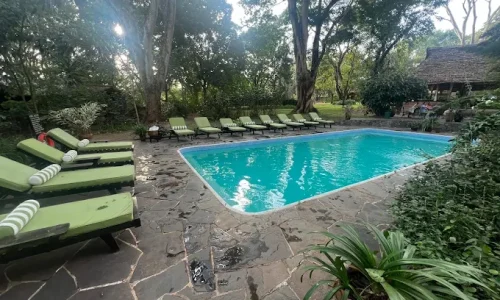
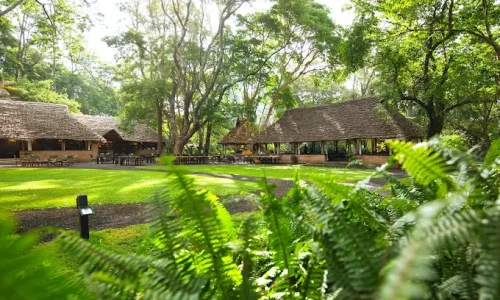
Your journey begins in Arusha, the safari capital of northern Tanzania. After landing at Kilimanjaro International Airport, you are greeted by your guide and transferred to Rivertrees Inn, a charming property set among gardens and old trees on the outskirts of the city. The inn provides a peaceful environment to rest after your flight, with spacious rooms, warm hospitality, and meals prepared from fresh local ingredients. If time allows, you may enjoy a short walk around the property or relax by the pool as you prepare for the adventure ahead.
Accommodation: Rivertrees Inn
Meal Plan: Breakfast, Lunch, Dinner


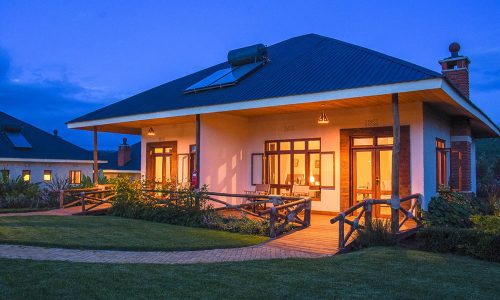
After breakfast, you head out for your first game drive in Tarangire National Park, famous for its vast elephant herds and towering baobab trees. The park is also home to lions, giraffes, zebras, and more than 400 bird species, making it a paradise for wildlife enthusiasts. The Tarangire River, a permanent water source, attracts animals throughout the year, creating excellent viewing opportunities. After a full day exploring the park, you retire to Tarangire Osupuko Lodge, where private cottages blend with the landscape and offer stunning views across the savanna.
Accommodation: Tarangire Osupuko
Meal Plan: Breakfast, Lunch, Dinner


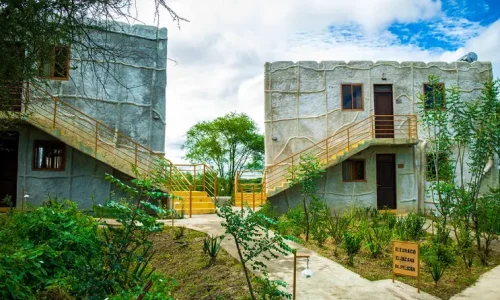
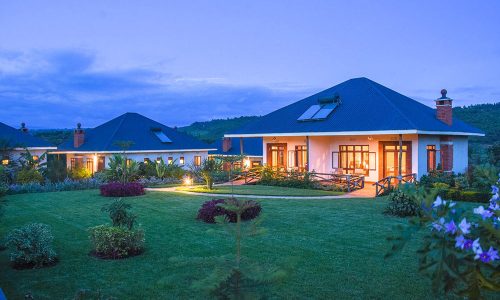
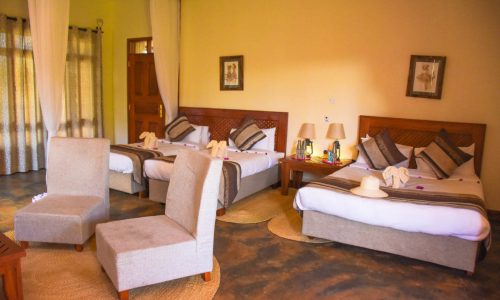
Your next destination is Lake Manyara National Park, known for its diverse habitats and scenic beauty. The park’s groundwater forest shelters blue monkeys and elephants, while the open plains are home to wildebeest, zebras, and the park’s famous tree-climbing lions. The alkaline lake itself often attracts large flocks of flamingos and pelicans, adding to the spectacle. In the late afternoon, you drive to Marera Valley Lodge near Karatu. The lodge sits on the rolling hills of the Great Rift Valley and offers comfortable rooms, a swimming pool, and sweeping views over the countryside.
Accommodation: Marera Valley Lodge
Meal Plan: Breakfast, Lunch, Dinner


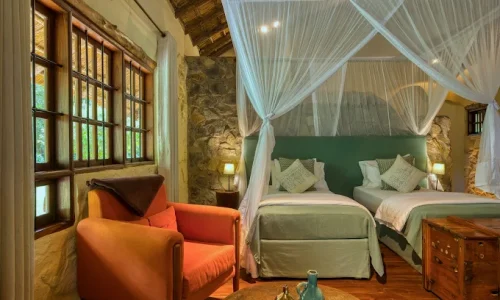
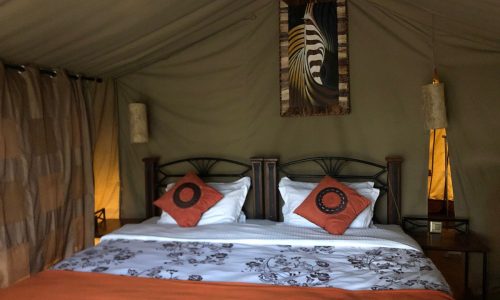
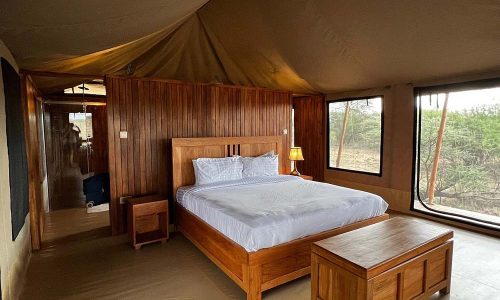
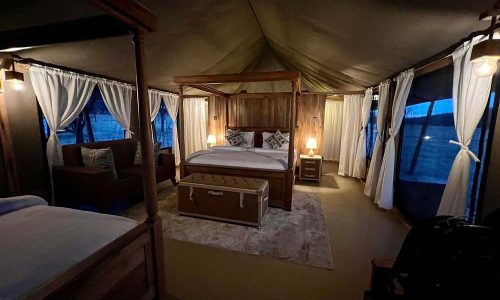
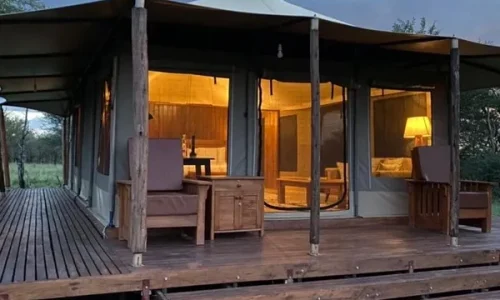
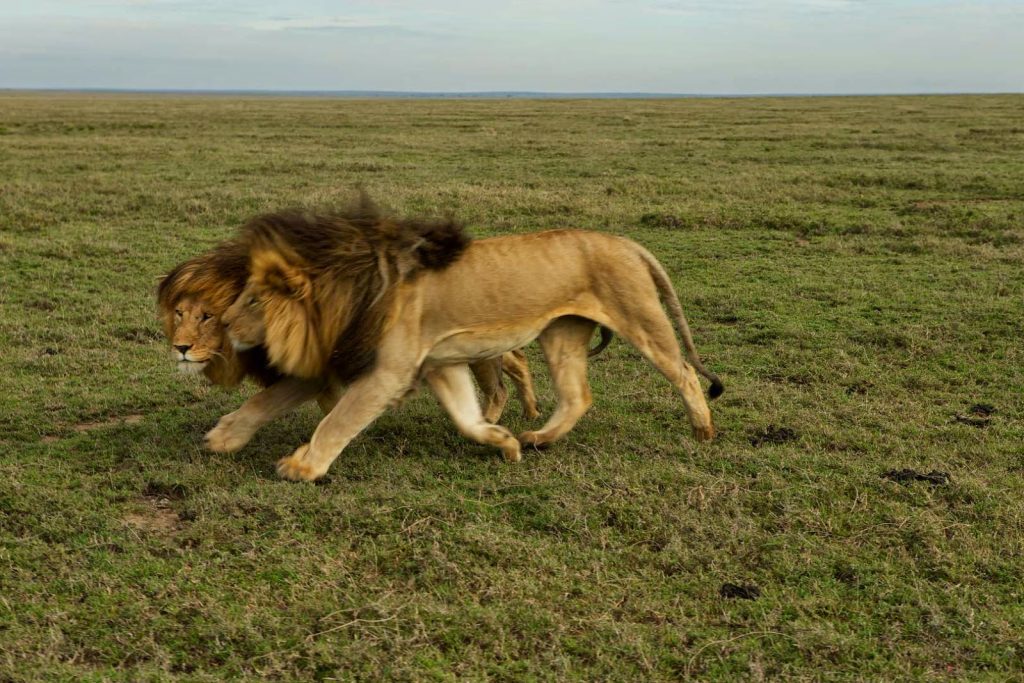
From Karatu, you travel into Serengeti National Park, a highlight of any safari in Tanzania. Over the next two days, you explore the endless plains that stretch to the horizon. The Serengeti is famous for the Great Migration, but even outside of migration months, the park teems with wildlife. Lions patrol the grasslands, cheetahs scan for prey, and large herds of wildebeest and zebra move across the savanna. Staying at Into wild enhances the experience, offering luxurious tented suites with modern comforts and panoramic views. Evenings around the campfire, under a star-filled sky, are unforgettable moments of the safari.
Accommodation: Into Wild Africa
Meal: Breakfast, Lunch, Dinner


Today you descend into the Ngorongoro Crater, often called the eighth wonder of the world. This UNESCO World Heritage Site is a natural sanctuary for nearly 30,000 animals within its caldera, including lions, elephants, hippos, and one of the best chances to spot black rhinos. The crater floor combines grasslands, forests, and a central lake, creating varied habitats that support rich wildlife. After a day of game viewing, you return to Marera Valley Lodge for another evening of relaxation and hospitality.
Accommodation: Marera Valley Lodge
Meal Plan: Breakfast, Lunch, Dinner


On your final day, you return to Arusha, where you can enjoy optional activities depending on your flight schedule. These may include a visit to a local coffee plantation, a cultural tour with the Maasai community, or shopping for handcrafted souvenirs at local markets. Later, you are transferred to Kilimanjaro International Airport for your departure, marking the end of a memorable safari week in Tanzania.
| PAX | 1 PAX | 2 PAX | 3 PAX | 4 PAX | 5 PAX | 6 PAX |
| Price | on request | on request | on request | on request | on request | on request |
Prices vary depending on the level of comfort and the season. Budget safaris usually start around US$2,200–2,800 per person, mid-range options range between US$3,500–5,000, and luxury itineraries can go beyond US$6,000. The cost includes park fees, accommodation, meals, a professional guide, and transport within Tanzania. International flights and optional extras such as balloon safaris are usually not included.
Most travelers find 5 to 7 days ideal. This timeframe allows you to visit major parks like Serengeti, Ngorongoro, and Tarangire without rushing. Shorter trips of 3–4 days work if you only focus on one or two parks, while 10–12 days give you more time to explore remote areas or combine safari with Zanzibar.
Seven days is not too long for Tanzania. It provides a comfortable pace, with time to enjoy game drives, relax at lodges, and experience different ecosystems. You avoid the fatigue of constant travel while maximizing wildlife sightings.
es. A week allows you to experience the highlights of northern Tanzania. With careful planning, you can see elephants in Tarangire, tree-climbing lions in Manyara, the endless Serengeti plains, and the unique Ngorongoro Crater.
The dry season from June to October is the most popular, with excellent wildlife viewing and the Great Migration in Serengeti. The green season from November to March offers fewer crowds, lush landscapes, and great birding. April and May are rainy months with fewer visitors and lower prices, but some lodges close during this time.
Lightweight clothing in neutral colors, a good pair of binoculars, sunscreen, insect repellent, a hat, comfortable shoes, and a camera are essential. Pack layers for cool mornings and evenings, and don’t forget a reusable water bottle.