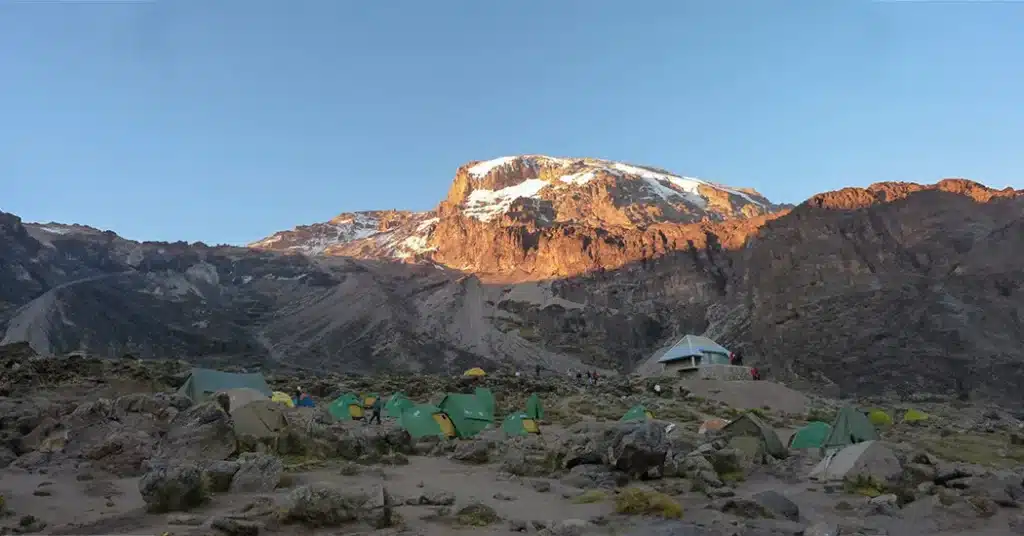
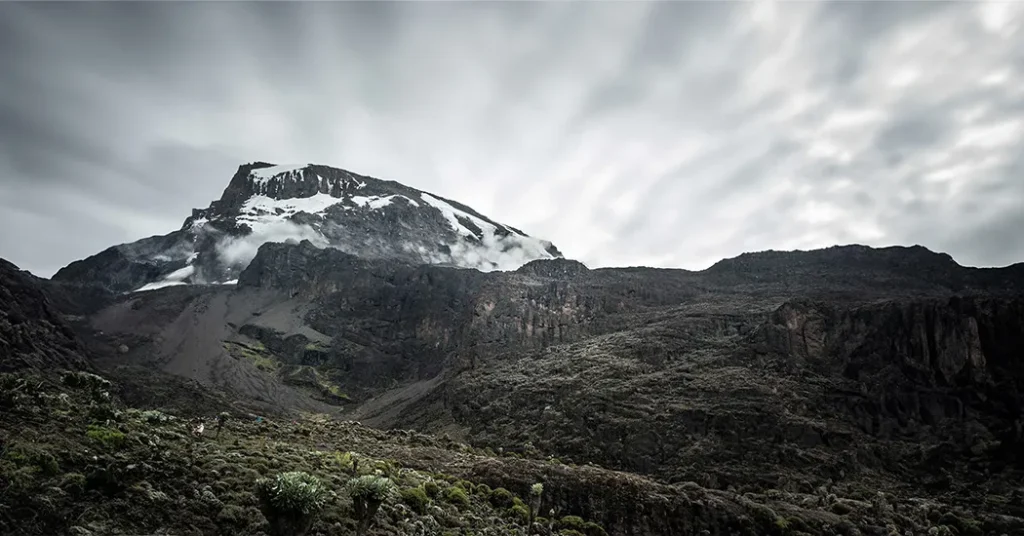
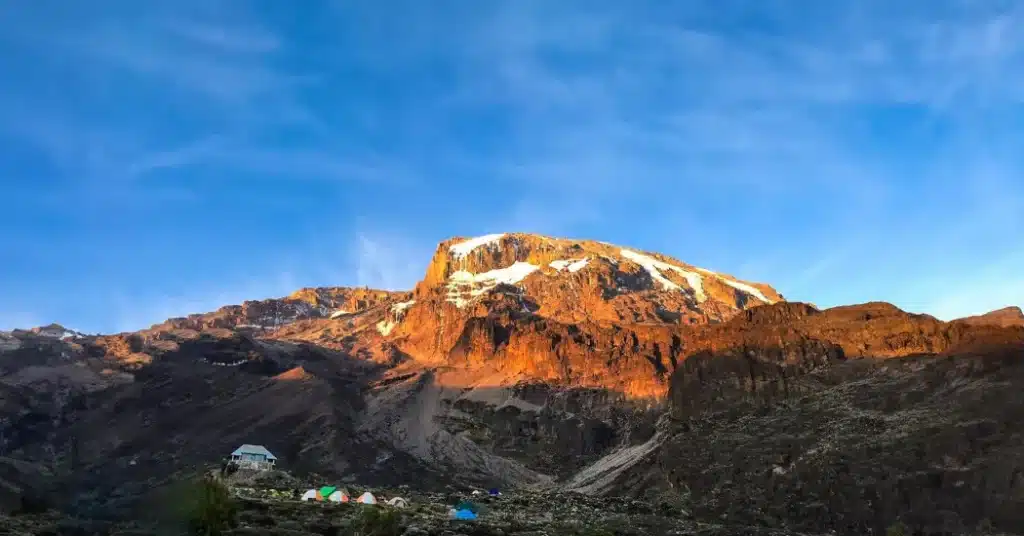
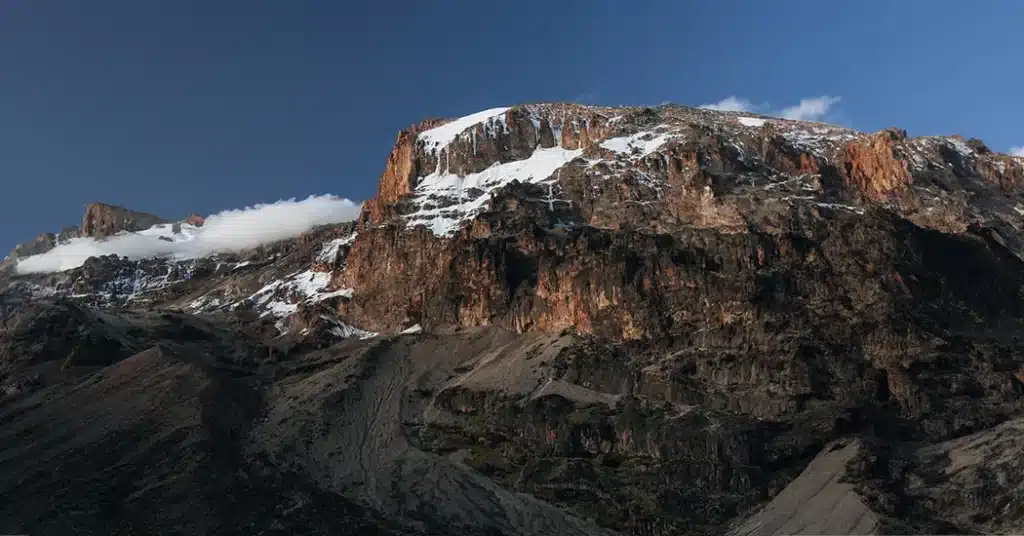
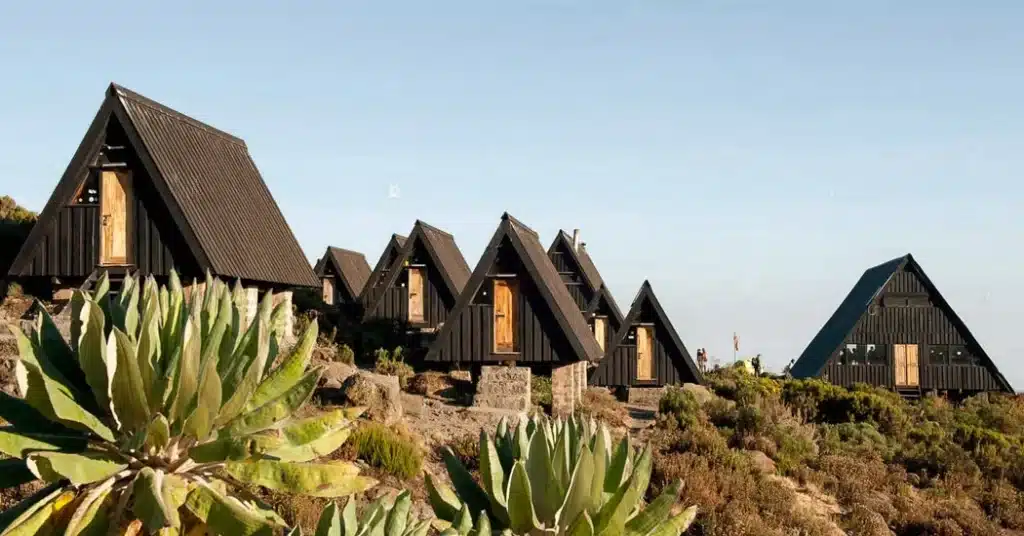
The Marangu (Coca-Cola) route is the most popular route up Kilimanjaro, hence the name. It is a busy route through the rainforest of Marangu village, into the heather and moorland, then into the alpine saddle desert between Mawenzi and Kibo, and up to the crater rim at Gillman’s Point, which only half of all trekkers reach. It is a relatively smooth trail, winding through beautiful scenery that changes considerably each day. The 5-day route is physically challenging for most people, as the acclimatization time is short and the overnight hike to the top requires mental and physical strength. The trail from the highest hut to the summit transitions into steeper and rockier terrain, making it difficult for most people. Accommodation is in A-style huts on this route, with the exception of Kibo Hut, which is a stone building with separate rooms to accommodate climbers. All sleeping huts have foam mattresses and pillows on wooden bunk beds, and all eating huts have benches and tables for meals. All huts except Kibo have running water and all have toilets.
Tour Summary
Day 1
Mandara Hut (8,860 Ft/ 2,700 M)
Accommodation: Mandara Hut
Meal Plan: Breakfast, Lunch, Dinner
Day 2
Mandara Hut ~ Horombo Hut (12 200 Ft/ 3 720 M)
Accommodation: Horombo Hut
Meal Plan: Breakfast, Lunch, Dinner
Day 3
Acclimatization Day
Accommodation: Moor Land
Meal Plan: Breakfast, Lunch, Dinner
Day 4
Horombo Huts – Kibo Huts
Accommodation: Kibo Hut
Meal : Breakfast, Lunch, Dinner
Day 5
Kibo Huts – Gilman’s Point – Uhuru Peak – Horombo Huts
Once you have finished breakfast, it is time to leave Arusha and head towards the southeast entrance of Kilimanjaro National Park, better known as Marangu Gate. Upon arriving at Marangu Gate, you will be given the time to check in and register. This is where you begin your ascent of Kilimanjaro. The first leg of this route takes you through the woods and the rainforest, where you will be able to take in the eucalyptus trees and various species of birds. If you are lucky, you may just spot a Colobus monkey or two – keep an eye out for black or white fur! Make sure you have the appropriate equipment and footwear because the low altitudes can produce wet, muddy soil.
Day 2: Mandara Hut ~ Horombo Hut (12 200 Ft/ 3 720 M)
To start off day 2, you will explore the final stretch of woodland as the massive stretch of moorland begins to open up right in front of your eyes. On your walk, you can appreciate the jagged peaks of Mawenzi that ascend up towards the skies of Africa. It is common for people to experience the onset of altitude sickness at these heights. It is important to pay attention to how you feel and communicate with your guide at the first and slightest indication of illness. After reaching the Horombo Huts, you will have time to unpack and experience the view of Kibo before dinner.
You will spend an extra day at the Horombo Huts to allow your body to acclimate to the increasingly high altitude. You must stay at camp and relax if you are showing any signs of illness or are feeling especially tired. However, if you feel well-acclimated to the altitude, then you are free to walk up to Mawenzi Hut and admire the incredible view of Kibo and Mawenzi. Keep a steady pace and you walk the route and enjoy the magnificent landscape. Otherwise, you can take a journey to the remarkable Zebra Rocks. This requires a climb of 310 meters.
On day 4, you will walk through varied and strikingly picturesque landscapes. To begin, you will continue across the heath as it slowly turns into the parched, desolate highlands between Mawenzi and Kibo. The scenery here is littered with huge and small volcanic rocks, acting as a testament to the volcanic activity of years past. The final stretch to the Kibo Huts is very steep and physically challenging. Once you arrive at the Kibo Huts, it is time to organize your equipment and warm clothes for tomorrow’s journey to the peak. To prevent freezing, keep any water your plan on bringing in a thermos. Get to bed early, as the next day’s trek requires a full night’s sleep worth of energy. You are getting ready to take on Kilimanjaro’s most ultimate challenge!
Day 5 : Kibo Huts – Gilman’s Point – Uhuru Peak – Horombo Huts
Hiking: 4-5 Hours Overnight Altitude: ~12,205
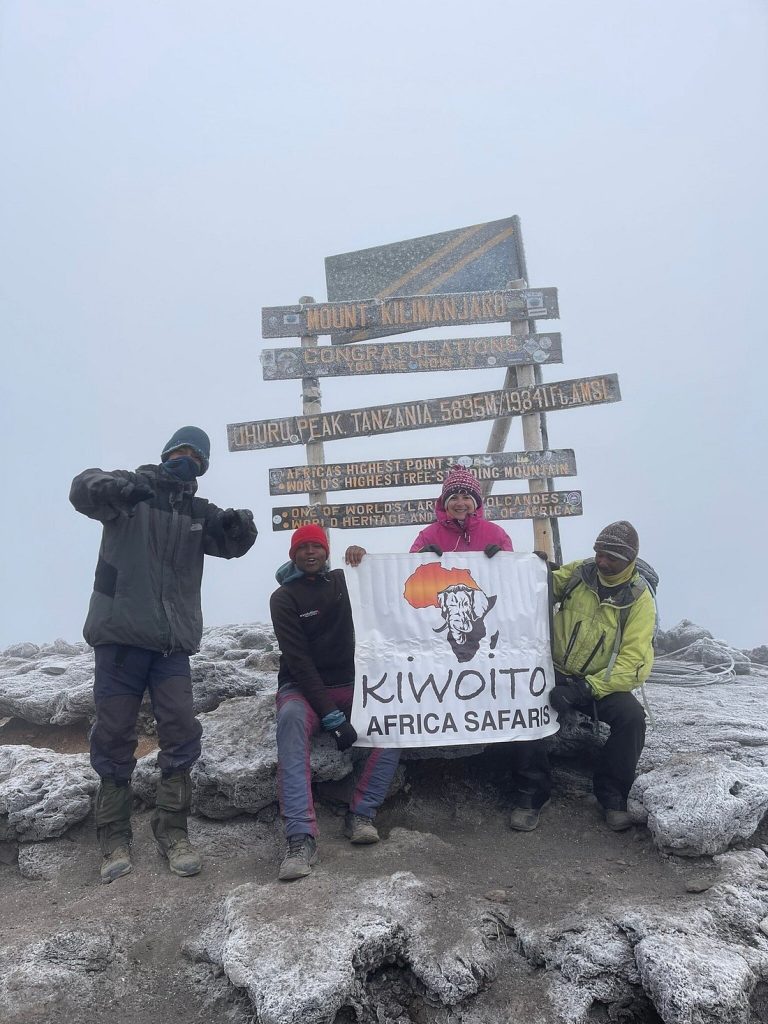
As you awake around midnight, there is just enough time for a small meal before you begin your nightly hike. Many hikers consider the difficult terrain, scattered with loose rocks, to be the most difficult part of the climb. The goal is to reach Gilman’s Point by dawn. This is to make sure that you can make it to Uhuru, the highest point of Kibo, shortly after sunrise. There will be a quick stop at Gilman’s Point to experience the glorious view. Afterward, you will continue along the edge of the crater to Uhuru; this is the last part of the ascent and features a steady incline. Depending on when you take your journey, you may face snow on the final stretch of the path to Uhuru Peak, the highest point in Africa and the very top of Kilimanjaro. As you reach the peak, an altitude of 5,895, you can congratulate yourself as you experience the astounding view and get a picture in front of the Uhuru Peak Sign. Now it is time to start back towards the Kibo Huts. You will find that this part goes by incredibly quickly. At the Kibo Huts, you will stop to relax and enjoy a much-needed lunch before moving along to the Horombo Huts, where you will enjoy a well-deserved full night’s rest.
As we make the final descent through the rainforest to the Marangu Gate, we will have lunch and say farewell to our mountain crew. Afterward, we will leave Mount Kilimanjaro National Park and drive back to Arusha for a much-needed shower and overnight
Price
Price per person (2 pax)
$ 2,048
Price per person (4 pax)
$ 1,947
Price per person (6 pax)
$ 1,897
Inclusions
Safety Equipment:
Professional Mountain Guides, all head guides (at least 1 per trip) currently certified by NOLS USA as WFR (Wilderness First Responder)
Park Fees
Campsite fees
Emergency Rescue Fees
Camping equipment and other gears:
Mountain Meals
Transfer from the hotel to the starting point
Transfer from the last point to the hotel
Exclusions
Accommodation upon arrival and last day
Tips for a mountain guide, recommended 15-20 per group per day
Porters 5 – 10$ per porter per group per day
Personal expenses
Personal items
Personal insurance/travel insurance
Personal medicines/first aid kit
Personal trekking gears
Sleeping bag
FAQS
What type of accommodation is provided?
Unlike most Kilimanjaro routes, the Marangu Route uses mountain huts at each camp, providing beds, blankets, and basic facilities, offering more comfort than tented camps.
What scenery and wildlife can I expect?
The route passes through lush rainforest, alpine moorlands, and volcanic landscapes. Hikers may spot colobus monkeys, various birds, and small antelopes along the lower sections.
What should I pack for a 6-day climb?
Essential items include warm clothing, trekking boots, gloves, hat, sunscreen, trekking poles, a headlamp, a small daypack, and a reusable water bottle. Layering is important for varying temperatures.
Is the Marangu Route suitable for beginners?
Yes, it is one of the most beginner-friendly routes, thanks to gradual ascents, hut accommodation, and clearly marked trails. Proper fitness and preparation are still required.
Are guides and porters provided?
Yes. All treks include experienced guides, porters to carry luggage, and cooks. Guides ensure safety, monitor acclimatization, and provide support throughout the climb.
Can the itinerary be customized?
Yes, the 6-day plan can be adjusted to include extra acclimatization days, combine with safari trips, or accommodate personal pace preferences.